
Logo Printing Techniques on Ceramics: Fired Decal, Screen Printing, and UV DTF
Ceramic logo printing techniques dictate the visual precision, durability, and chemical compliance of branded ceramic goods in commercial manufacturing.
The three primary application methods—Fired Decal, Screen Printing, and UV DTF—utilize distinct technical mechanisms to flawlessly transfer corporate brand designs onto porous bisque or fully vitrified glazed surfaces during specific stages of the complete Bat Trang ceramic manufacturing process.
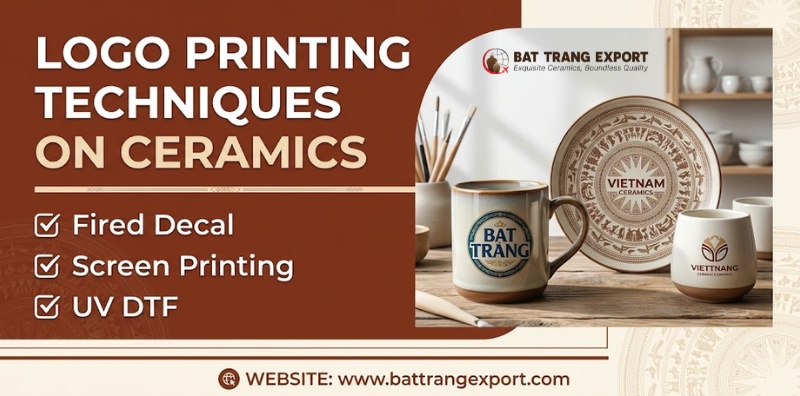
The selection between high-temperature kiln firing, direct ink application, or cold-transfer polymer adhesion depends strictly on production volume, color complexity, dishwasher resistance, and mandatory food safety standards such as California Proposition 65 or (EC) No 1935/2004.
This guide, Bat Trang Ceramic Factory will provides a comparative technical analysis of these commercial branding methods to optimize B2B sourcing and manufacturing pipelines
1. High-Temperature Fired Decal Printing
High-temperature fired decal printing utilizes a specialized water-slide paper to transfer the logo directly onto the ceramic surface. Subsequently, technicians manually apply the decal before firing the product in an industrial kiln at extreme temperatures ranging from 700°C to 800°C. During this intense thermal process, the base glaze melts to securely lock the ink, fusing the design permanently into the product’s surface.
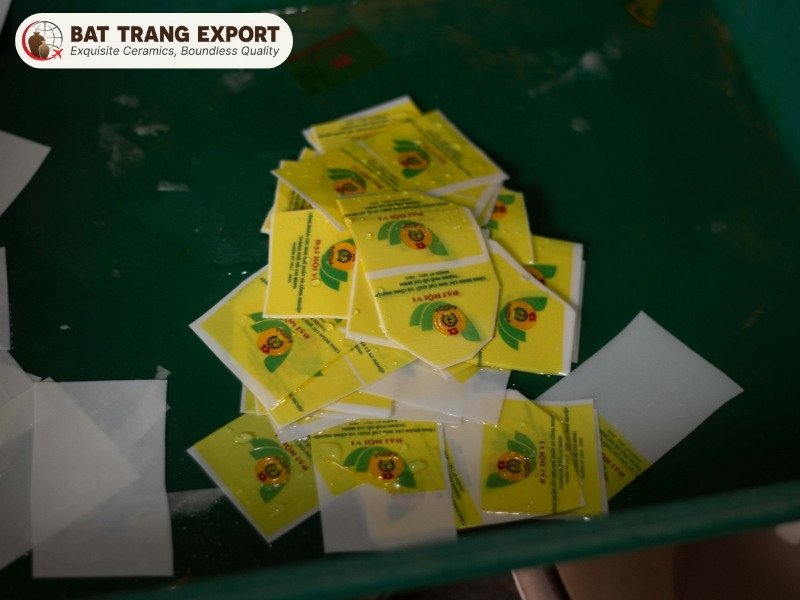
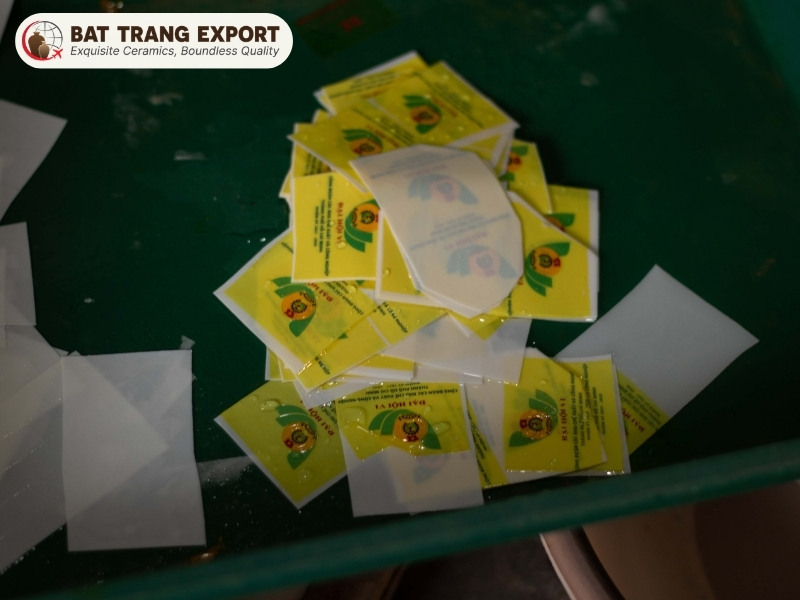
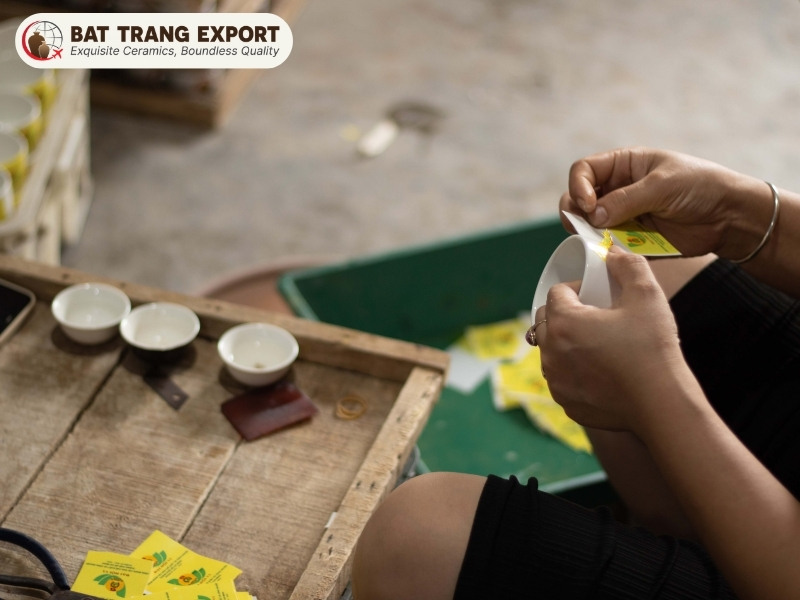
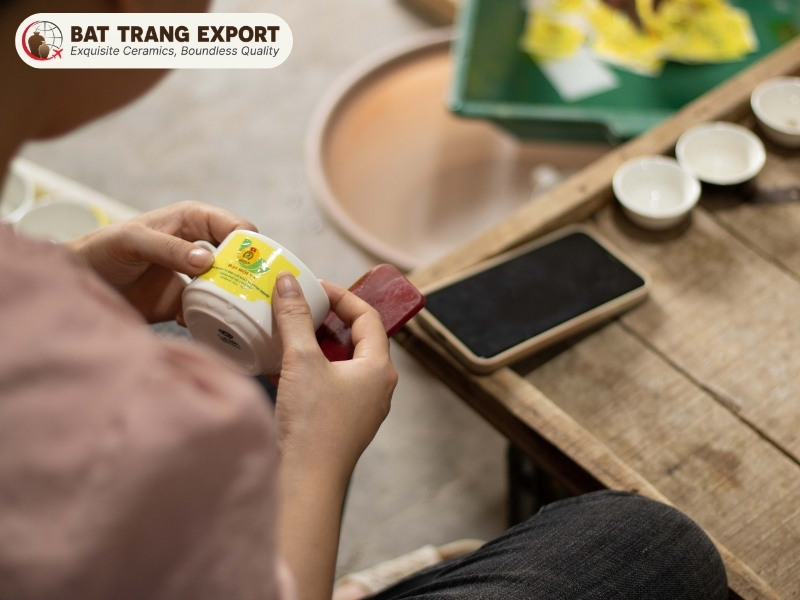
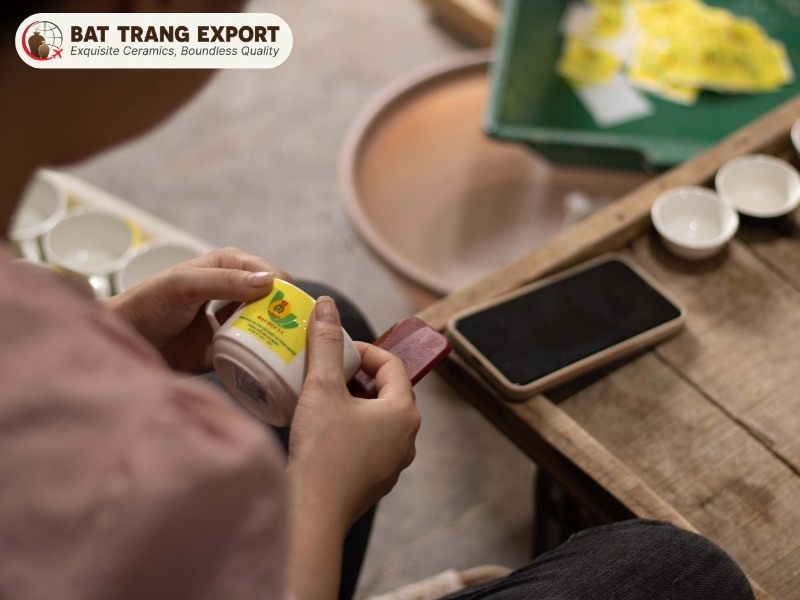
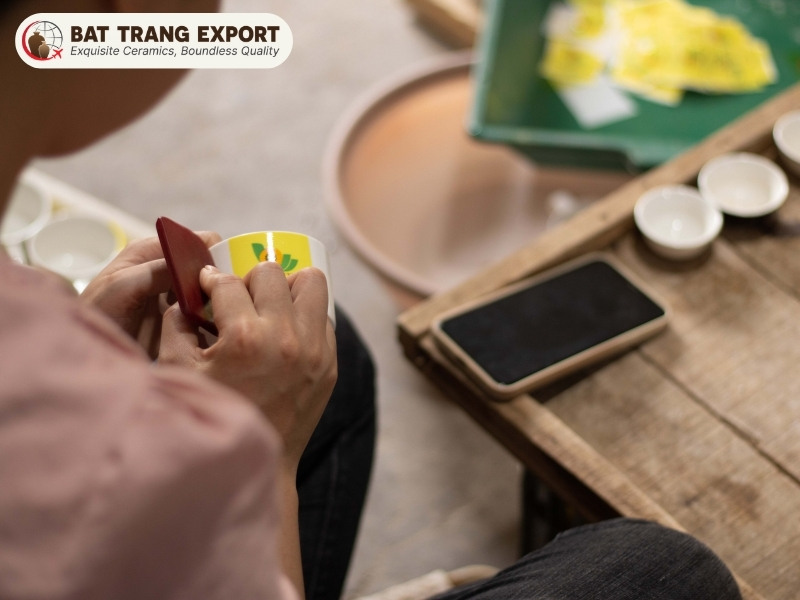
Fired decal printing Technique
Pros:
- Permanent Durability: The high-temperature firing completely encases the pigments, making the logo highly scratch-resistant against metal cutlery.
- Microwave & Dishwasher Safe: This robust chemical integration guarantees the product is 100% safe for heavy-duty industrial dishwashers.
- FDA/LFGB Compliance: The extreme heat ensures the elimination of toxic elements, meeting strict global food safety standards.
- High Aesthetic Integration: The printed design becomes entirely flush with the glaze, delivering a flawless, premium finish.
Cons:
- Higher Production Cost: Operating industrial kilns consumes massive amounts of energy, which inherently increases the final unit price.
- Slight Color Shift: The extreme thermal oxidation process can trigger minor chemical reactions, causing a slight deviation from the original Pantone color.
This advanced printing technique is strictly best for hospitality (HORECA) environments, restaurant dinnerware, premium corporate gifts, and export orders demanding absolute color durability and health safety.
2. Screen Printing
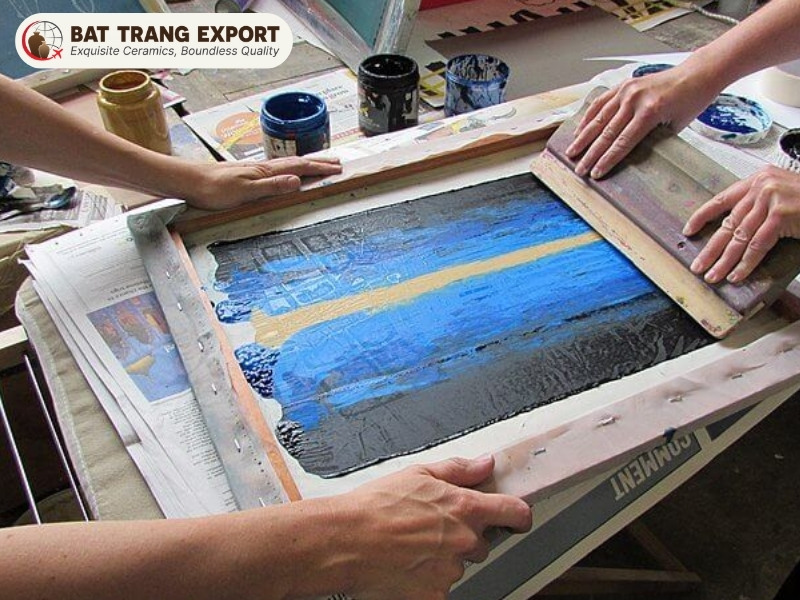
Screen printing operates by forcing specialized ceramic ink through a custom-made mesh screen directly onto the product’s exterior. Following the mechanical ink application, the ceramics undergo a low-temperature thermal curing process to solidify the pigments and enhance surface adhesion. Consequently, this highly automated technique bypasses the extreme heat of traditional kilns, significantly accelerating the overall manufacturing cycle.
Pros:
- Ultra-Fast Production Speed: The streamlined mechanical application allows facilities to process thousands of units in a fraction of the time.
- Cheapest Per Unit: Eliminating the high-temperature firing phase drastically reduces energy consumption, making it highly cost-effective for massive order volumes.
Cons:
- Limited Color Capability: The mesh screen mechanism only accommodates one to three solid colors, strictly prohibiting the printing of complex gradients.
- Moderate Durability: Because the ink rests on top of the glaze without melting into it, aggressive scrubbing can cause the logo to scratch or fade over time.
Screen printing is undoubtedly best for massive promotional giveaways, large-scale trade show merchandise, and marketing campaigns featuring minimalist solid-color logos.
3. UV DTF Transfers (UV DTF)
Direct-to-Film (UV DTF) transfer is an emerging printing technology that flawlessly executes complex, multi-color designs without requiring a kiln firing. Specialized industrial printers deposit UV-curable ink onto a clear PET film, immediately hardening the pigments to create a highly adhesive, durable transfer sticker. Technicians then simply peel the protective backing and firmly apply the decal directly onto the sanitized ceramic surface.
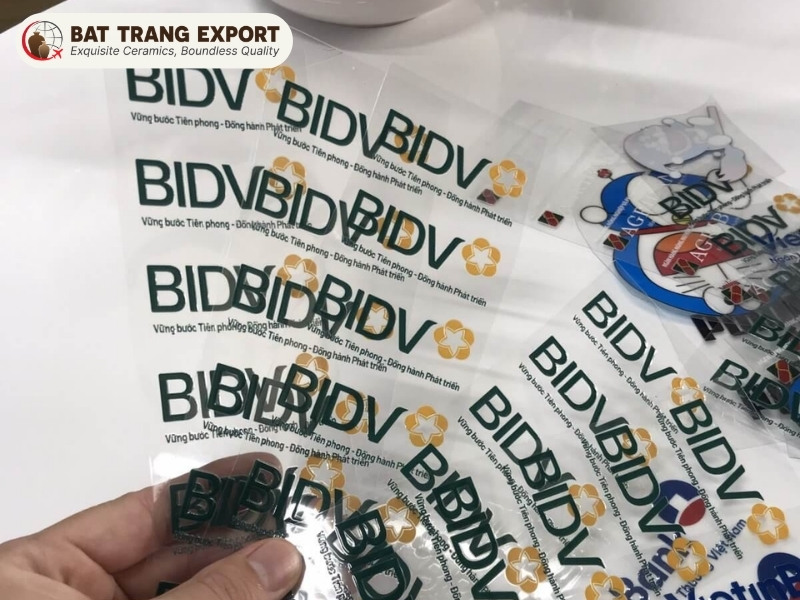
Pros:
- Maximized Production Speed: Bypassing the lengthy kiln firing phase radically shortens the manufacturing lead time for urgent corporate orders.
- Absolute Color Accuracy: Operating without thermal chemical reactions ensures the ink matches digital CMYK files and Pantone codes with 100% precision.
- 3D Embossed Effect: The thick layering of UV-cured ink generates a premium, raised tactile texture that immediately captures consumer attention.
Cons:
- Manual Labor Intensive: Applying the transfers requires precise manual alignment, increasing the handling time per unit.
- Limited Durability: Relying on chemical adhesives means these items are not microwave safe and will degrade rapidly in harsh industrial dishwashers.
UV DTF transfers are strategically best for decorative items like indoor planters and vases, office coffee mugs, and urgent corporate gifts featuring highly complex, multi-colored vector graphics.
Quick Comparison of Ceramic Printing Methods
Comparing the technical specifications of these three distinct printing methods empowers B2B buyers to optimize their commercial procurement strategies. The following data table clearly outlines the core capabilities of each technique, ensuring your specific corporate order aligns precisely with the correct manufacturing process.
| Feature | Fired Decal Printing | Screen Printing | UV DTF Transfers |
| Production Speed | Slow (requires re-firing) | Ultra-Fast (best for high volume) | Fast (no firing needed) |
| Production Cost | High | Lowest per unit | Medium |
| Dishwasher/Microwave | Excellent (100% Safe) | Medium (Fades slightly) | Fair (Not recommended) |
| Color Capability | Good (Slight shift possible) | Limited (1-3 solid colors) | Excellent (100% accurate, 3D effect) |
Decision Framework: Which Printing Technique Suits Your B2B Order?
Navigating the technical differences between these printing methods ensures your final ceramic product strictly meets its intended commercial application. Therefore, we recommend utilizing this strategic decision framework to finalize your B2B manufacturing requirements:
- For Hospitality & Export F&B: You must strictly choose Fired Decal printing. Commercial restaurants cannot compromise on durability, as dinnerware must perpetually withstand aggressive chemical detergents and high-temperature industrial dishwashers.
- For Mass Promotional Giveaways: You should select Direct Screen Printing. This specific method maximizes cost-efficiency and accelerates production schedules for massive event merchandise requiring simple corporate logos.
- For Decorative Items & Urgent Multi-color Gifts: You should choose UV DTF transfers. This technology flawlessly renders complex, multi-colored logos and generates unique 3D visual effects without requiring a time-consuming kiln firing process.
Professional Custom Logo Printing Services at Bat Trang Export Factory
Bat Trang Ceramic Factory proudly operates as a fully integrated manufacturing facility, possessing the advanced machinery necessary to execute all three prominent printing techniques.
We consistently invest in modern printing technology to ensure our B2B clients receive the most precise and scalable branding solutions available. Consequently, our extensive technical capabilities allow us to seamlessly pivot between high-volume screen printing and premium fired decal applications based entirely on your budget.
Furthermore, our dedicated engineering team comprehensively evaluates your brand guidelines before initiating any physical production. We actively consult with international procurement managers to recommend the exact printing method that protects both your corporate identity and your financial bottom line.
To guarantee absolute client satisfaction, we strictly enforce the following manufacturing commitments across all custom logo orders:
- 100% Lead-Free Ink: We exclusively utilize non-toxic, lead-free ink formulations, completely neutralizing heavy metal migration to ensure your branded merchandise strictly meets global quality standards for ceramic exports, guaranteeing total health safety and absolute US FDA compliance.
- Free 3D Mockups: Our design department provides complimentary digital 3D mockups and rapid physical sampling, allowing you to approve exact logo placements before mass production.
- Factory-Direct Pricing: By executing all printing procedures in-house, we entirely eliminate third-party markups, delivering highly competitive unit economics directly to your enterprise.
- 1-to-1 Warranty: We provide a comprehensive 1-to-1 replacement warranty to instantly compensate for any defective, blurred, or scratched logos originating from our facility.
In conclusion, selecting the appropriate ceramic logo printing technique is the foundational step to producing impactful corporate gifts and durable hospitality tableware. By accurately matching the printing method to your specific commercial requirements, you actively protect your promotional investment and ensure long-term brand visibility. Contact Bat Trang Ceramic Factory today with your vector logo files to receive expert technical consultation and a highly competitive, customized B2B quotation!