
The Complete Bat Trang Ceramic Manufacturing Process for Export Quality
Bat Trang Ceramic Factory consistently delivers premium wholesale ceramics through a rigorously controlled manufacturing process. Furthermore, international buyers demand absolute structural integrity, requiring every production phase to adhere strictly to global export standards.
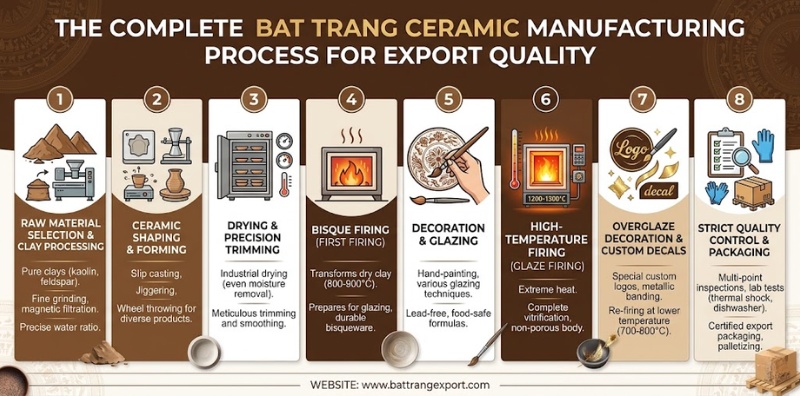
Understanding this multi-step manufacturing sequence provides importers with confidence in our supply chain reliability. Therefore, we integrate traditional craftsmanship with advanced industrial protocols to guarantee superior durability and compliance for all global shipments.
Step 1: Raw Material Selection and Clay Processing
The foundational phase of ceramic production requires absolute purity and consistency in raw materials to meet rigorous export market demands. High-quality natural clays, including kaolin and feldspar, undergo extensive soaking and subsequent fine grinding within a ball mill.
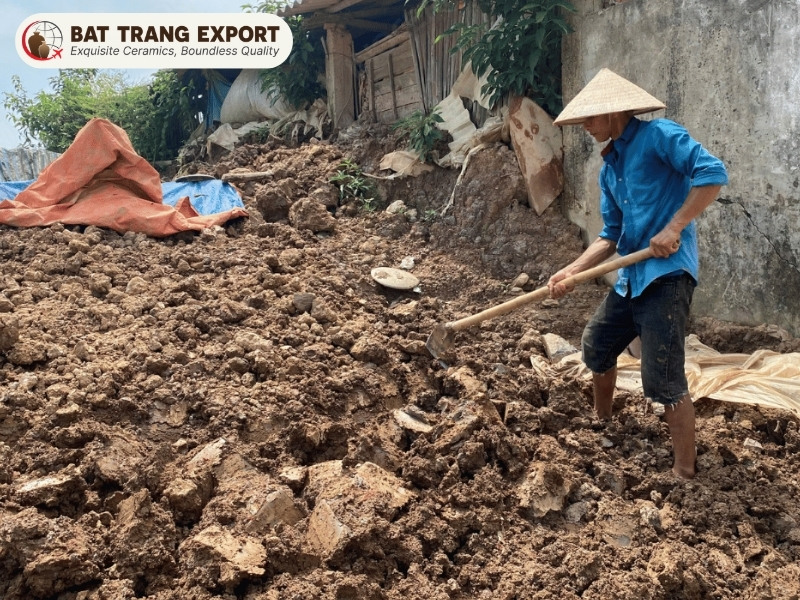
Besides, this liquid clay slip passes through a high-intensity magnetic filtration system to eliminate 100% of metallic impurities, particularly iron oxide, which prevents black spots on the final glaze surface.
Following filtration, the purified clay mixes with water at a precise, research-backed ratio to achieve standard viscosity and density. This meticulous slip formulation directly determines the thickness, tensile strength, and uniformity of the greenware.
Consequently, any critical error during this initial material processing stage remains uncorrectable in subsequent manufacturing steps.
Step 2: Ceramic Shaping and Forming
Bat Trang Ceramic Factory utilizes diverse forming techniques tailored precisely to the specific product type, dimensional requirements, and Minimum Order Quantity (MOQ). In addition, selecting the appropriate shaping method ensures optimal structural consistency and production efficiency for bulk export orders.
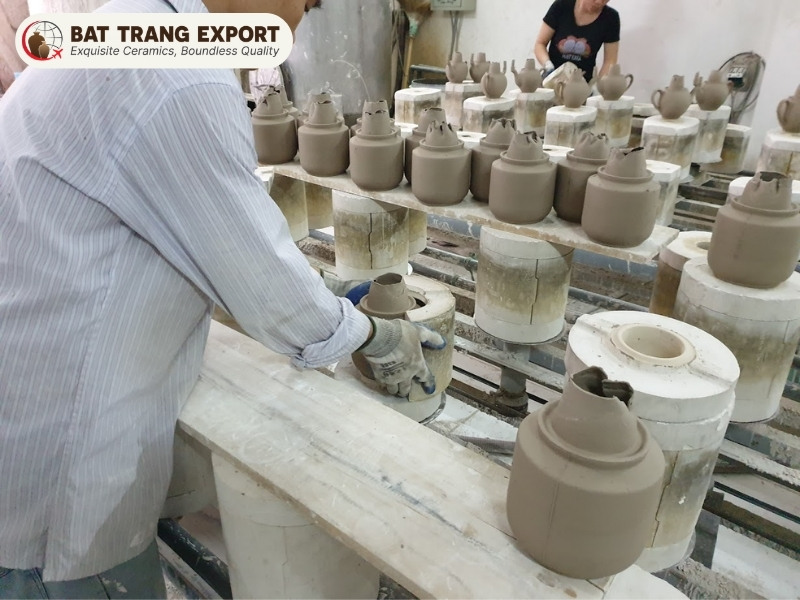
– Slip Casting: This technique remains best for complex, hollow shapes such as custom teapots and intricate vases. Liquid clay slip is poured into specialized plaster molds, which absorb moisture to form a uniform ceramic shell. Furthermore, understanding the differences between OEM vs. ODM in ceramic manufacturing helps B2B buyers realize why slip casting is the absolute mandatory method for precisely replicating highly detailed, custom-sculpted bespoke designs.
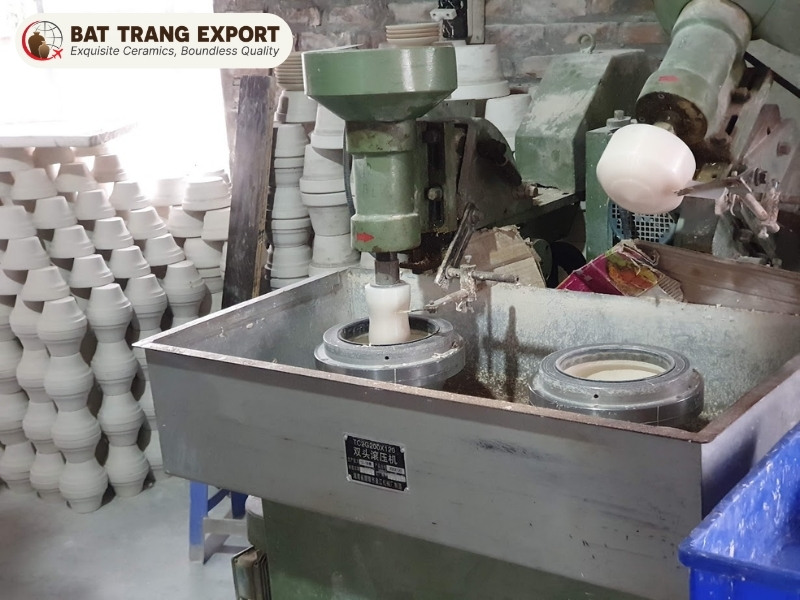
– Jiggering and Jolleying: This mechanical shaping approach is best for uniform flatware, including commercial plates and standardized bowls. A mechanized profile tool presses the clay against a rotating plaster mold to ensure rapid, high-volume production. Consequently, it guarantees dimensional exactness across extensive wholesale tableware batches.
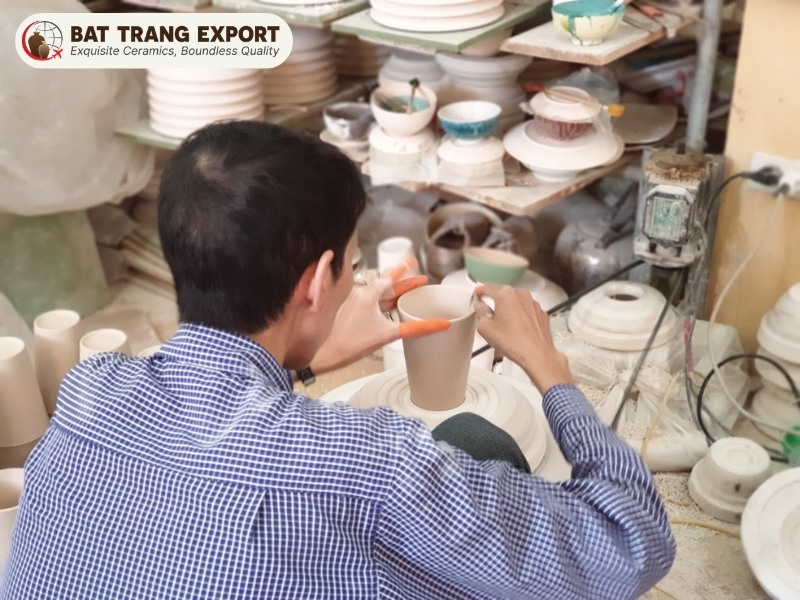
– Wheel Throwing: This manual method is reserved for bespoke, handcrafted pieces requiring unique dimensional profiles. Skilled technicians manually shape the spinning clay, providing exceptional structural density and localized thickness control. But, due to its labor-intensive nature, it is typically deployed for lower-volume, premium boutique collections.
Step 3: Drying and Precision Trimming
After the initial forming stage, the greenware still retains a significant moisture content and requires gradual drying to prevent structural cracking. This critical phase demands exceptional patience and rigorous environmental control to maintain product integrity. Therefore, managing the evaporation rate is essential for the dimensional stability of the fragile clay body.
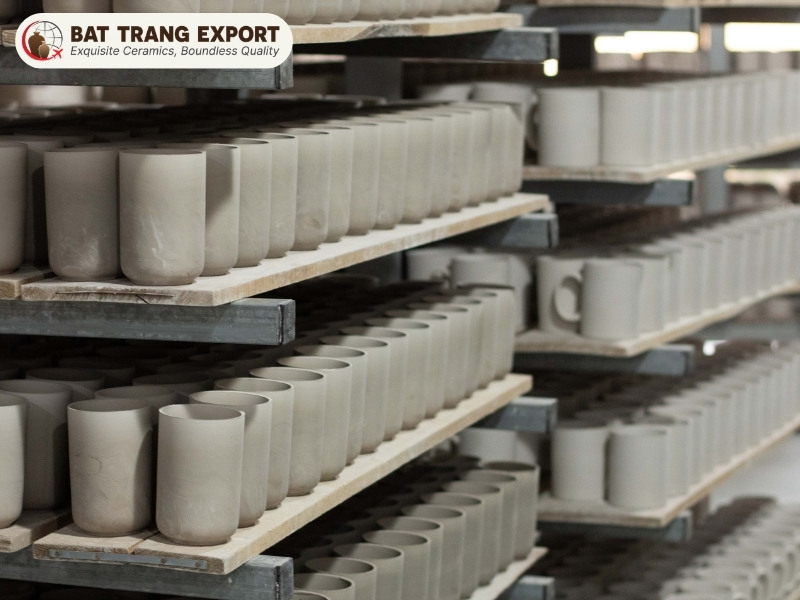
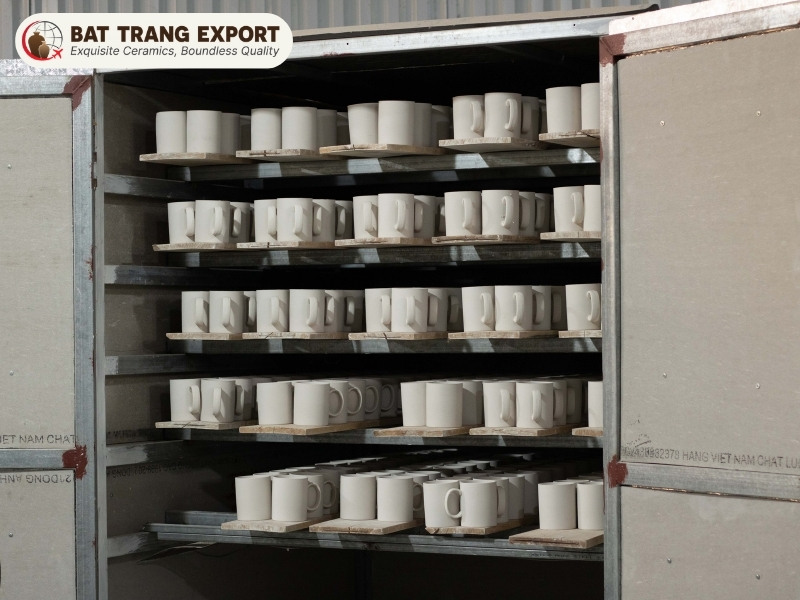
The core differentiator of an export-standard facility involves the utilization of industrial drying chambers. We precisely control the internal temperature and humidity levels, enabling the ceramics to dry evenly from the core to the exterior. In addition, this technological approach eliminates the risks of weather dependency and internal micro-fractures associated with natural outdoor drying.
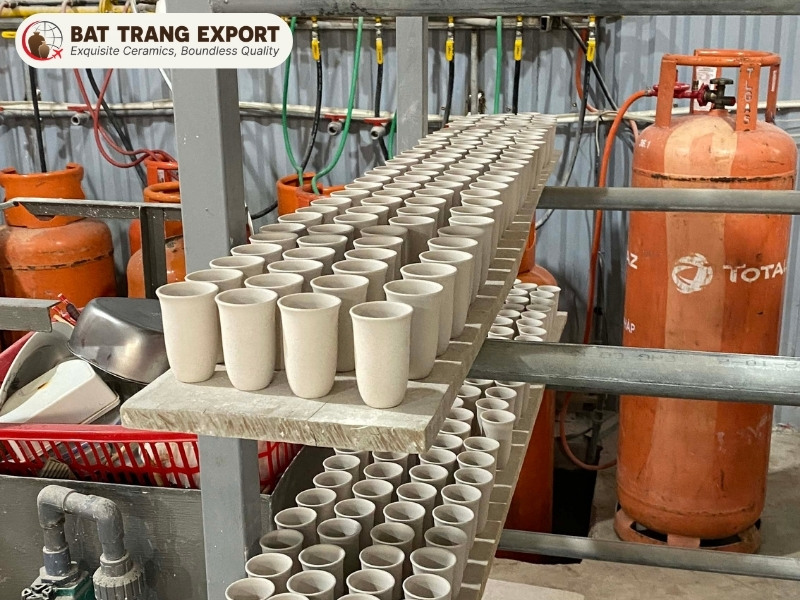
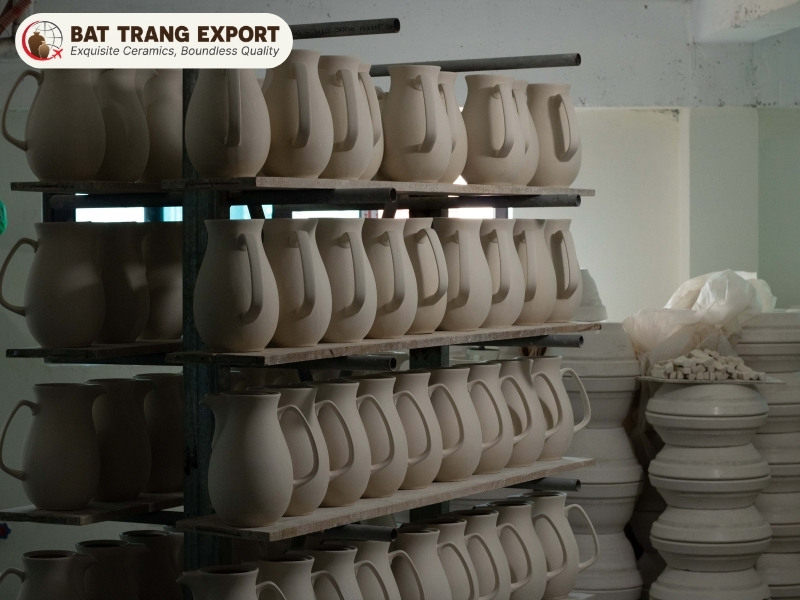
Ceramic product drying room at the Bat Trang Ceramic Factory
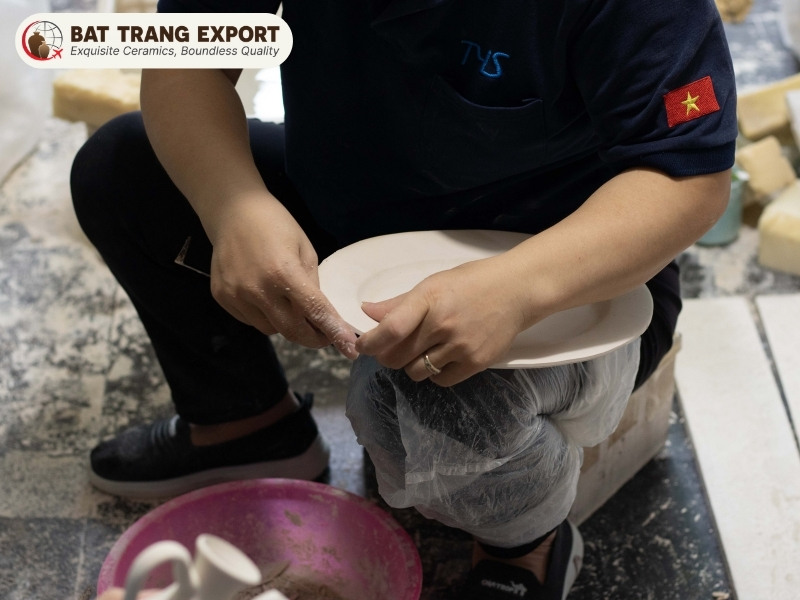
Once the optimal moisture reduction is achieved, technicians execute the precision trimming and finishing phase. They meticulously remove excess clay from the rims and mold seams, smooth the surface profile, and refine the basal footprint. Finally, a damp sponge clears away residual dust particles, fully preparing the greenware for the initial kiln firing.
Step 4: Bisque Firing (First Firing)
The primary objective of the bisque firing phase is to permanently transform the fragile, bone-dry clay into a highly durable, porous ceramic structure known as bisqueware. During this thermal process, the kiln reaches precise temperatures typically ranging from 800°C to 900°C. Furthermore, this controlled heat successfully releases chemically bound water and thoroughly burns off any residual organic matter within the clay matrix.
Achieving the correct bisqueware state is crucial because it ensures the ceramic body possesses the optimal porosity required to absorb the liquid glaze evenly. Without this preliminary thermal hardening, the delicate greenware would immediately dissolve upon contact with the water-based glaze suspension. Therefore, bisque firing acts as the foundational thermal stabilization step prior to high-temperature processing.
Step 5: Ceramic Decoration and Glazing
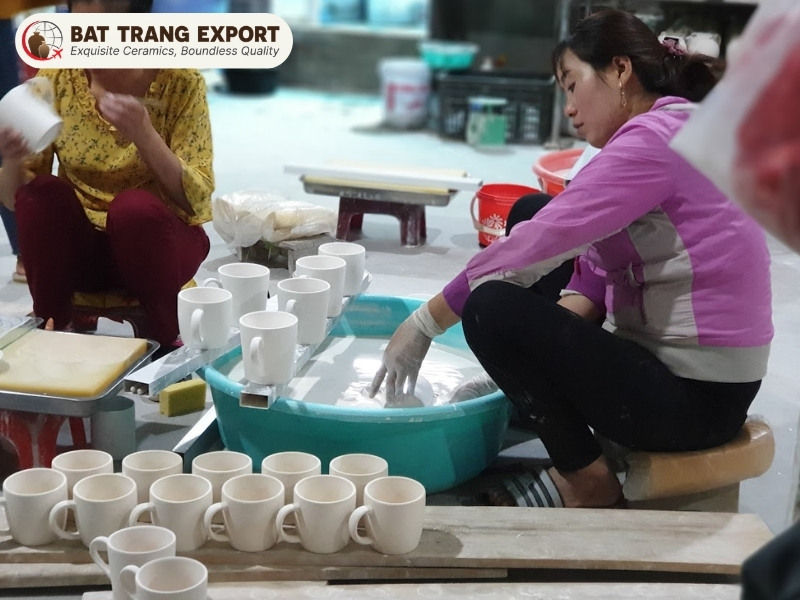
Following the bisque firing, the ceramics proceed to the decoration phase to acquire their final aesthetic colors and protective coatings. Underglaze decoration involves technicians meticulously hand-painting specific motifs directly onto the porous bisqueware before any vitreous layer is applied.
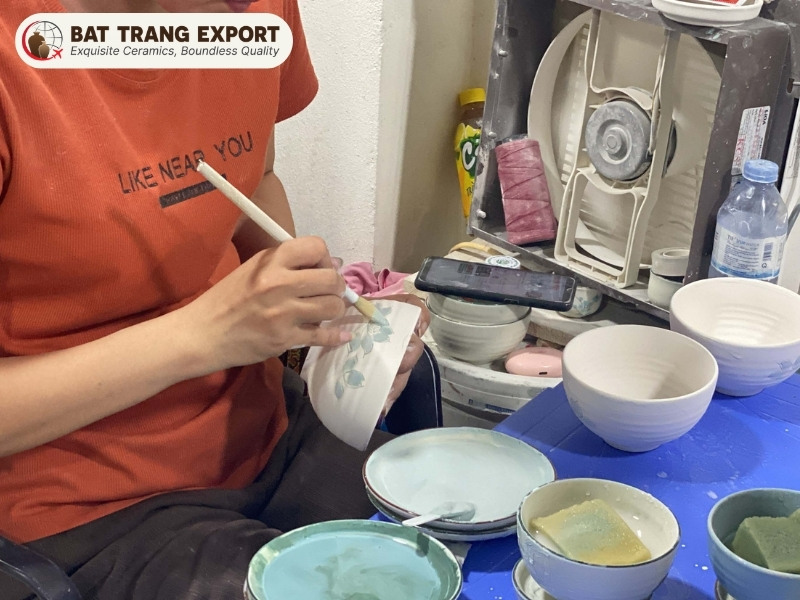
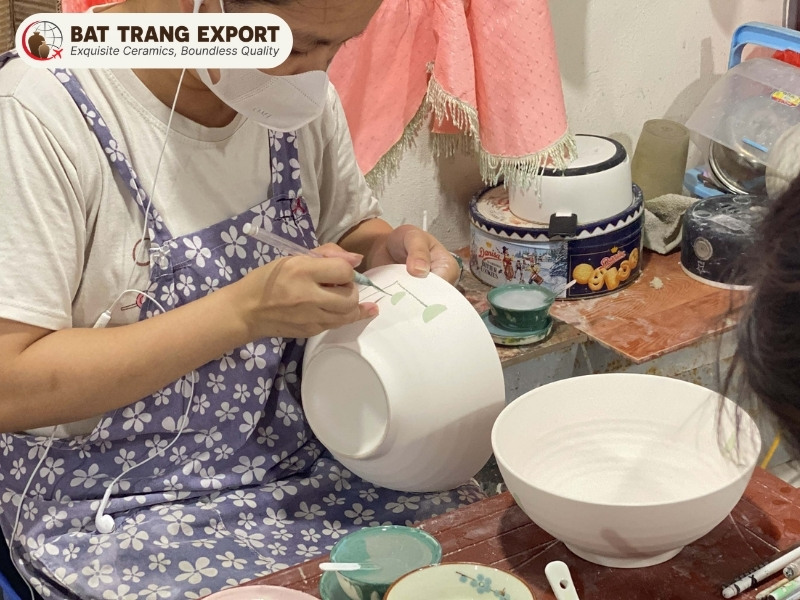
The hand-painted patterns are meticulously crafted by artisans from Bat Trang village
Furthermore, the factory employs varied application techniques, including precision dipping or pneumatic spraying, perfectly tailored to the specific coating. By exploring the common types of ceramic glazes for export orders, buyers can explicitly specify whether their collection requires a highly durable commercial gloss, a sophisticated matte, or an unpredictable reactive finish. Most importantly, every glaze formulation utilized at Bat Trang Export is strictly lead-free, ensuring absolute food-safe compliance for all international tableware shipments.
Step 6: High-Temperature Firing (Glaze Firing)
Following the glazing application, the ceramics are systematically loaded into advanced industrial gas or electric kilns for the final high-temperature glaze firing.
The internal thermal environment reaches extreme parameters, typically fluctuating between 1200°C and 1300°C, strictly dependent on the specific clay body and glaze formulation.
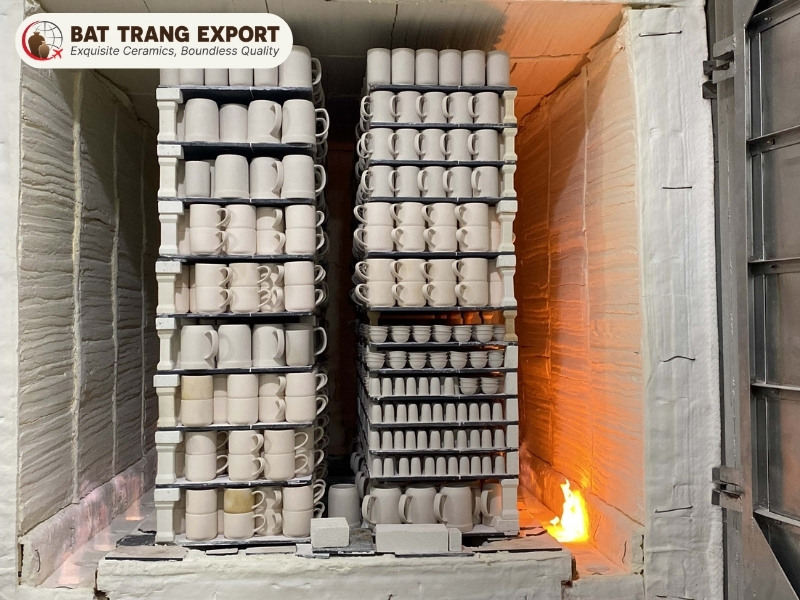
Furthermore, this intense thermal cycle lasts from 12 to 24 hours, utilizing precise kiln atmospheres like oxidation or reduction to achieve targeted glaze aesthetics.
Within this extreme temperature range, the clay’s molecular structure undergoes complete vitrification, creating a highly dense, non-porous ceramic body with absolute waterproof capabilities.
Subsequently, a carefully monitored cooling process is executed to prevent thermal shock and structural fracturing. Besides, this intense heat thoroughly eradicates any residual toxins, guaranteeing that the products are completely safe for direct food contact.
Step 7: Overglaze Decoration and Custom Decal Printing
This specialized overglaze decoration phase is exclusively implemented for export orders requiring intricate custom logo printing, metallic banding, or complex multi-colored decal applications.
These advanced visual embellishments utilize genuine gold, platinum, or synthetic decals that standard underglaze techniques cannot accurately reproduce. Furthermore, this customization guarantees that B2B buyers receive precise brand representation on their final merchandise.
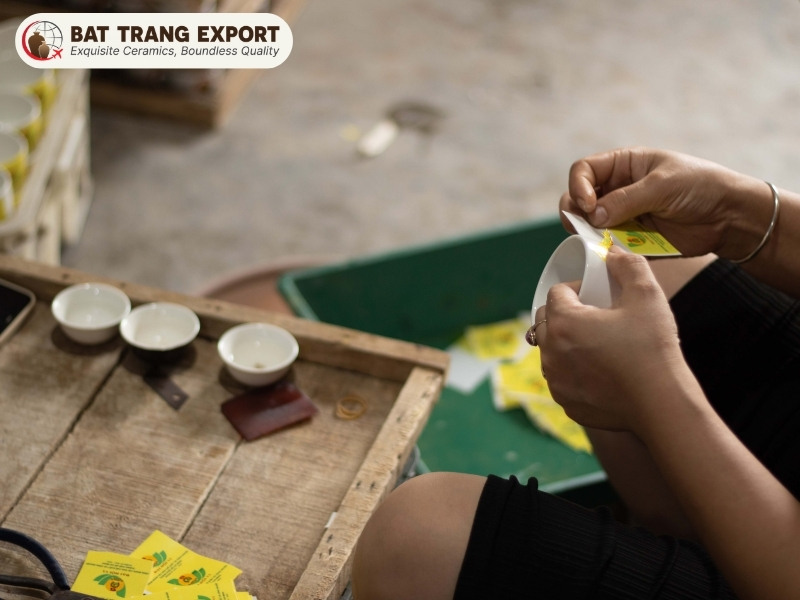
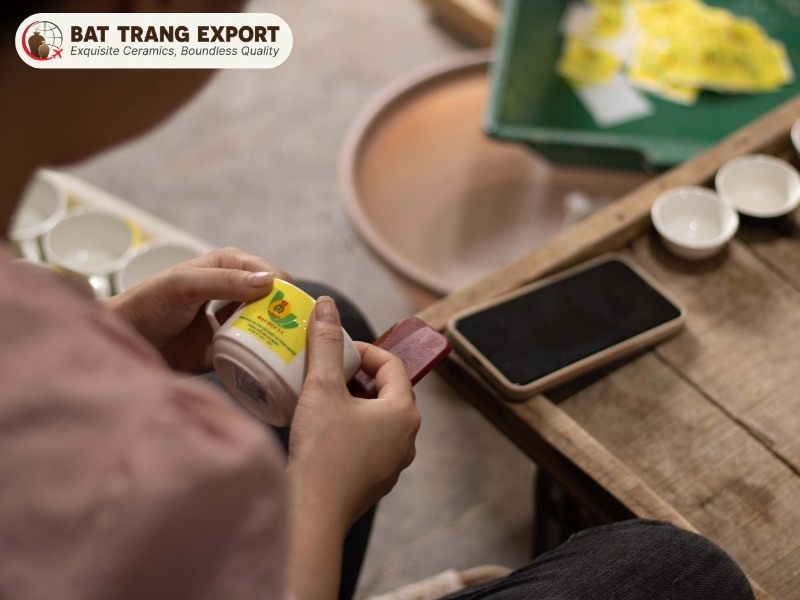
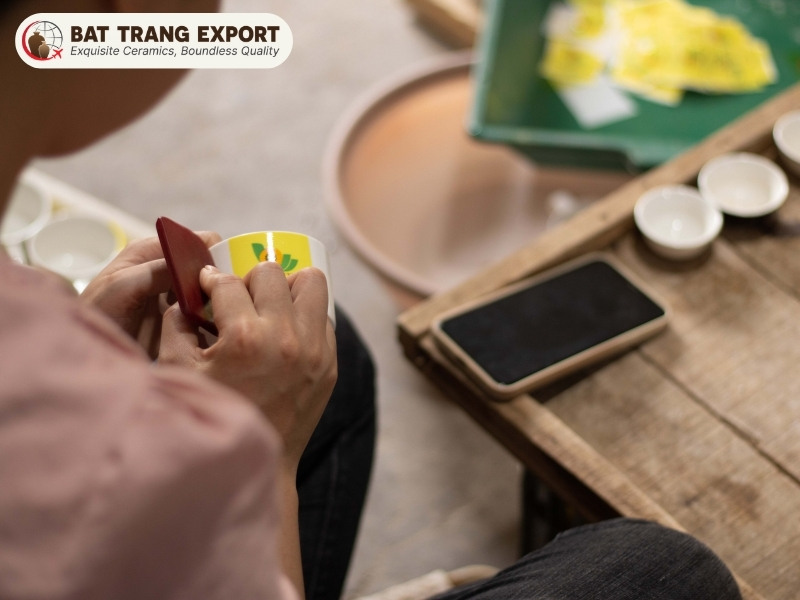
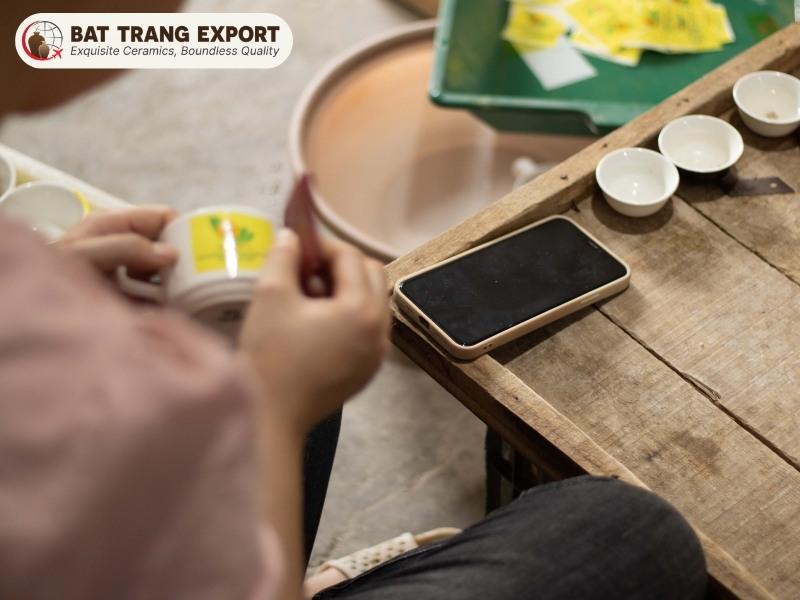
The worker is applying decals to the surface of ceramic products
After technicians carefully apply the custom decals onto the pre-fired, glossy glazed surface, the ceramics re-enter the kiln for a necessary third thermal cycle. This specific firing operates at a significantly lower temperature bracket, specifically between 700°C and 800°C.
In addition, this exact heat level provides sufficient thermal energy to melt the decal, allowing the pigment to sink deeply and fuse permanently with the underlying vitreous glaze.
Step 8: Strict Quality Control (QC) and Export Packaging
Bat Trang Ceramic Factory guarantees the structural and aesthetic integrity of every final shipment through a rigorous Quality Control (QC) protocol.
The inspection team conducts exhaustive visual and physical evaluations to identify microscopic defects, including pinholes, glaze crazing, dimensional warping, or pigment discoloration.
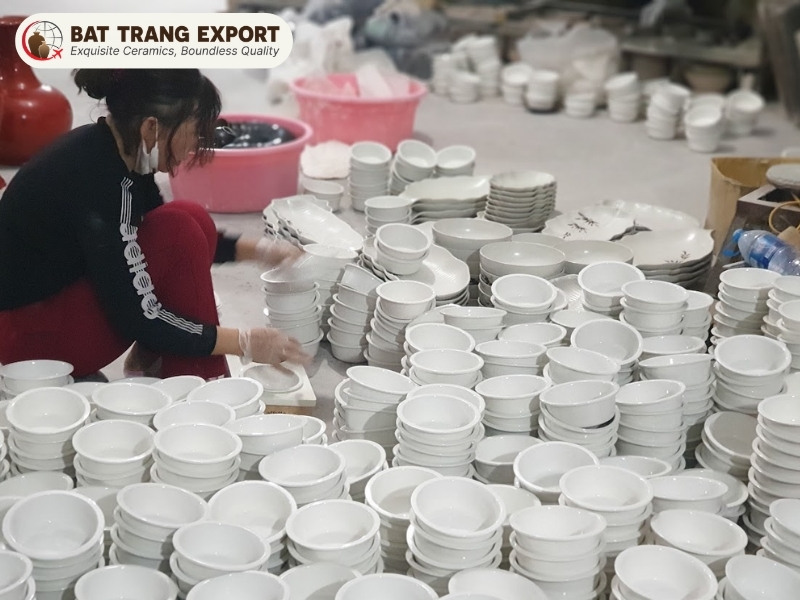
Furthermore, random batch samples undergo severe laboratory-grade testing, incorporating rapid thermal shock evaluations and stringent microwave or dishwasher safety verifications.
Once the ceramics pass all AQL (Acceptable Quality Limit) standards, the logistics department initiates the specialized export packaging sequence. The products are secured within drop-test certified internal configurations and heavily reinforced master cartons.
Once approved, the products must be secured within drop-test certified configurations. Instructing the logistics team on exactly how to package ceramic orders for export to prevent breakage—including strict ISPM-15 palletizing and heavily reinforced master cartons—ensures total cargo safety during volatile ocean freight operations.
Why Choose Bat Trang Export for Your Ceramic Sourcing?
Bat Trang Ceramic Factory operates a highly optimized 500-square-meter facility equipped with dozens of advanced industrial kilns. Furthermore, our impressive manufacturing metrics are the direct result of a systematic operational model that seamlessly integrates heavy machinery with precise human expertise. Therefore, we confidently fulfill stringent volume requirements and execute highly complex projects for global supply chains.
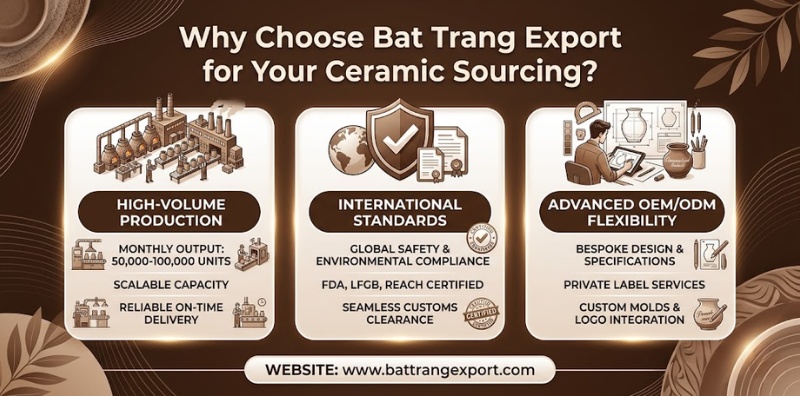
– High-Volume Production Capacity: Our meticulously optimized workflow consistently yields a massive monthly output ranging from 50,000 to 100,000 units. By continuously scaling our export ceramic factory production capacity with advanced automated kilns and a highly skilled workforce, we ensure absolute on-time delivery for massive global contracts without causing bottlenecks.
– Adherence to International Standards: We engineer every wholesale batch to meet the most rigorous global safety and environmental regulations. In addition, our strict manufacturing protocols guarantee full compliance with FDA, LFGB, and REACH certifications, facilitating seamless customs clearance for international buyers.
– Advanced OEM/ODM Flexibility: Our technical infrastructure easily accommodates both standardized mass production and highly intricate bespoke design specifications. Furthermore, we actively support private label clients through comprehensive customization services, ranging from custom mold development to precise brand logo integration.
Frequently Asked Questions (FAQs)
Importers frequently require specific technical clarifications before finalizing large-scale wholesale manufacturing contracts. The following section addresses the primary inquiries regarding our production timelines, safety protocols, and customization capabilities. In addition, our B2B support team remains available for deeper consultations regarding complex export requirements.
Q1: How long does the ceramic production process take for bulk orders?
The standard manufacturing lead time for bulk ceramic export orders generally ranges from 30 to 45 days, strictly depending on the specific molding complexity, requested glaze formulations, and current factory capacity.
Q2: Are your export ceramics food-safe and lead-free?
Yes, every ceramic product designed for culinary use strictly utilizes certified lead-free glaze and undergoes extreme high-temperature firing to ensure complete FDA and LFGB food-safety compliance.
Q3: Do you offer custom OEM ceramic manufacturing?
Yes, we provide comprehensive OEM and ODM manufacturing services, utilizing advanced CAD prototyping, custom plaster mold creation, and precise decal printing to accurately manufacture your exclusive brand designs.
Partnering with a technically advanced manufacturer is the most effective strategy to secure premium, compliant ceramics for your international retail distribution networks. Bat Trang Ceramic Factory continuously optimizes every stage of the production cycle to guarantee maximum structural integrity and aesthetic perfection for our B2B clients. Contact our export sourcing specialists today to request a detailed manufacturing quote and initiate your custom bulk order.