
Hand-Painted vs. Decal Printing on Ceramics: Choosing the Right Technique
The ceramic manufacturing industry utilizes two primary decoration methods: manual application via hand-painting and high-precision water-slide decal printing. While the former relies on skilled craftsmen applying metallic oxides directly onto clay, the latter transfers digitally printed graphics onto glazed surfaces.
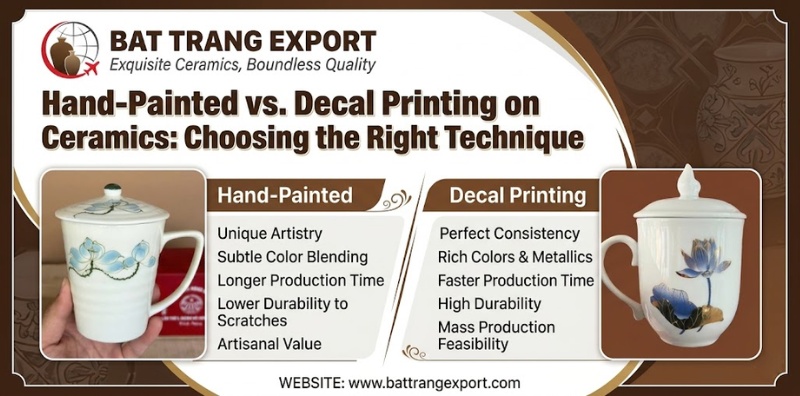
Choosing the correct technique directly impacts your production budget and significantly influences your brand’s market positioning. In this comprehensive guide, Bat Trang Export will analyze these two distinct methods to help you select the technical approach that best aligns with your specific corporate identity.
What is Hand-Painted Ceramic Decoration?
Hand-painted ceramic decoration is a traditional artisanal technique where craftsmen use specialized brushes to apply metal oxide pigments directly onto unglazed bisque ware. Following this manual application, the pottery is submerged in a clear liquid glaze and fired at extremely high temperatures to permanently seal the design.
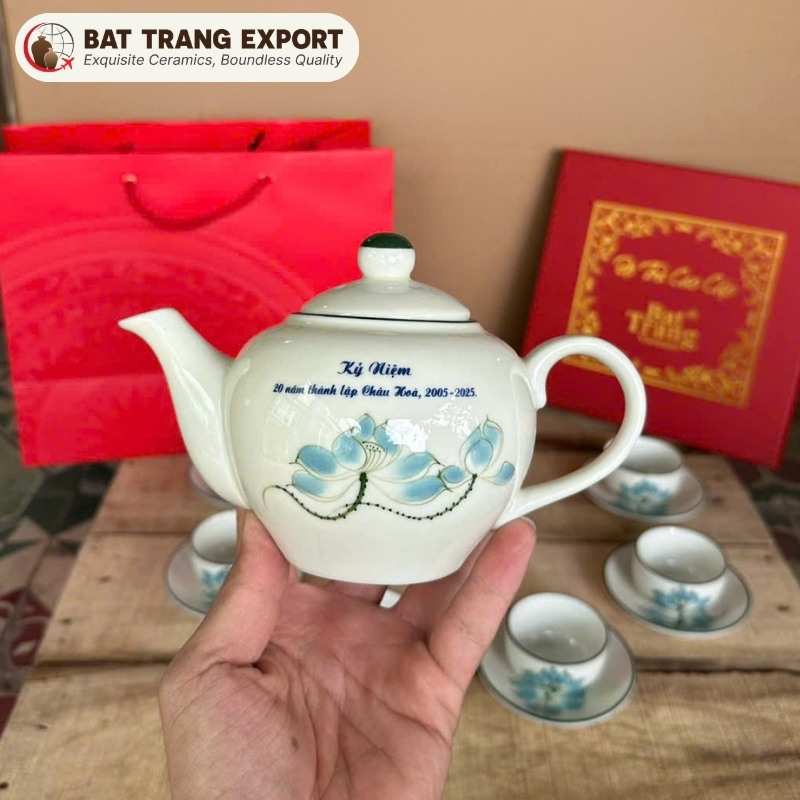
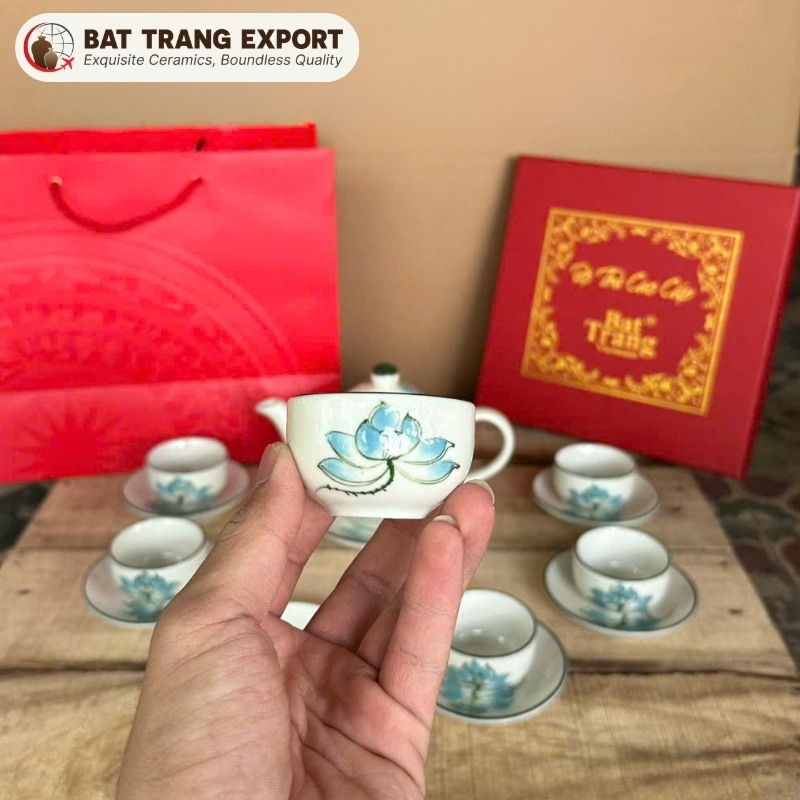
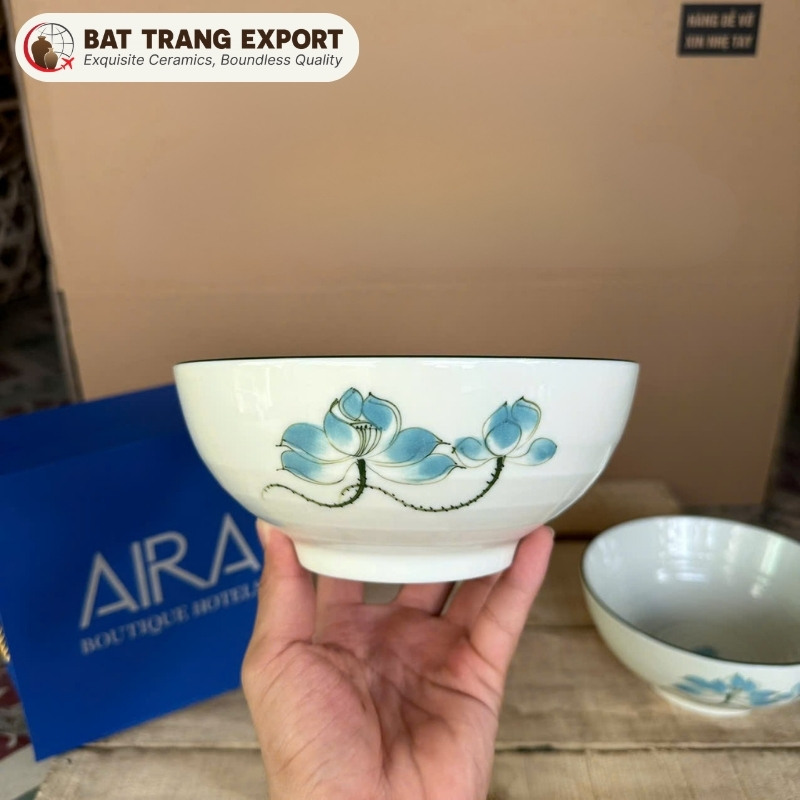
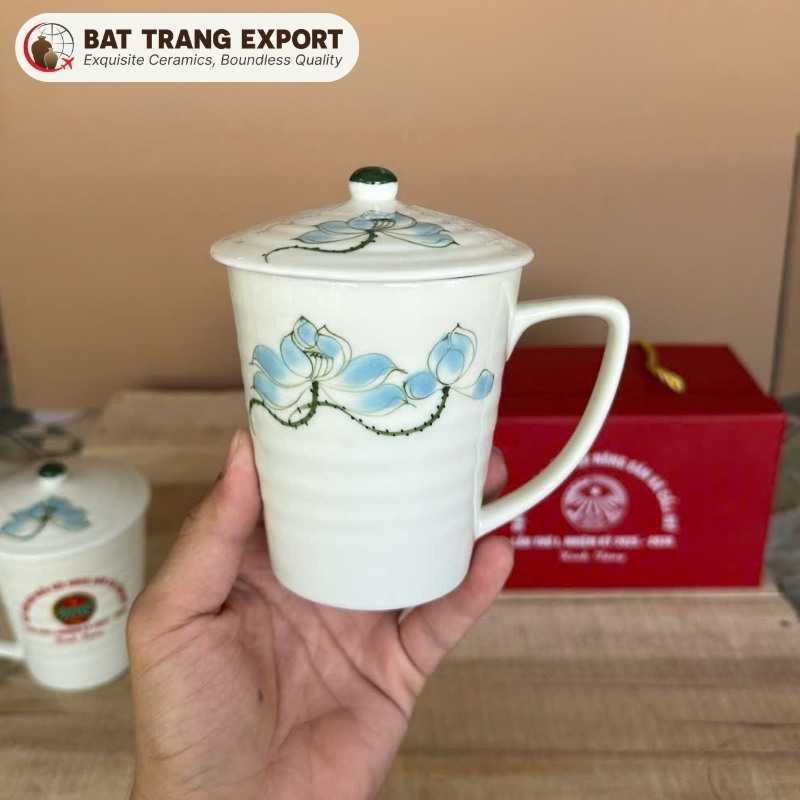
Ceramic products with decorative patterns are created by hand-painted technique
Pros and Cons of Hand-Painted Pottery
Evaluating the commercial viability of hand-painted ceramics requires a thorough understanding of its production dynamics. Therefore, B2B buyers must weigh the premium appeal against the inherent manufacturing variables.
Pros:
- Premium market positioning: This artisanal technique elevates the perceived value of the product, appealing directly to high-end boutique retail markets.
- Permanent underglaze durability: Because the pigments are completely encased beneath a vitrified glass layer, the colors will never scratch, fade, or degrade over time.
Cons:
- High labor cost: The intensive manual application process significantly increases overall production expenses compared to automated printing methods.
- Slower production speed: Depending entirely on human skill inherently restricts the daily manufacturing output for large-scale wholesale orders.
- Slight variations: Due to the nature of hand-brushing, no two pieces are 100% identical, which may not suit strict corporate identity standards.
If your brand plans to order hand-painted collections in massive volumes, lead times will inevitably extend. In such cases, it is vital to assess the export ceramic factory production capacity—specifically the size of their artisan workforce—to ensure they can handle the scale without compromising artistic quality.
What is Decal Printing on Ceramics?
Decal printing on ceramics utilizes a water-slide transfer mechanism to apply complex vector graphics or CMYK designs onto a pre-fired glazed surface. Subsequently, the factory conducts an overglaze firing process at lower temperatures, typically between 700°C and 800°C, causing the ink to melt and bond securely with the top glaze layer.
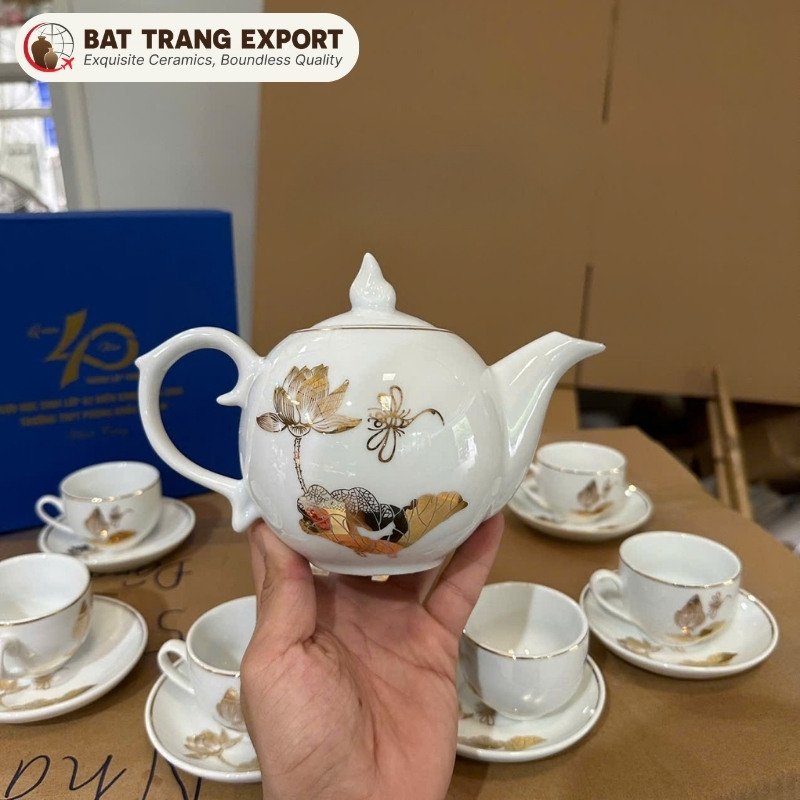
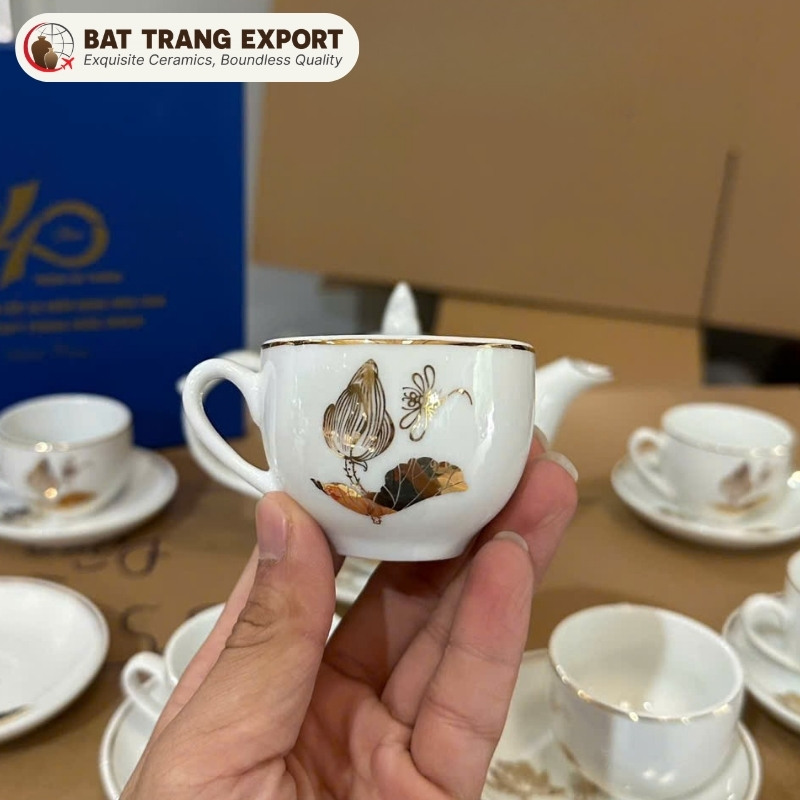
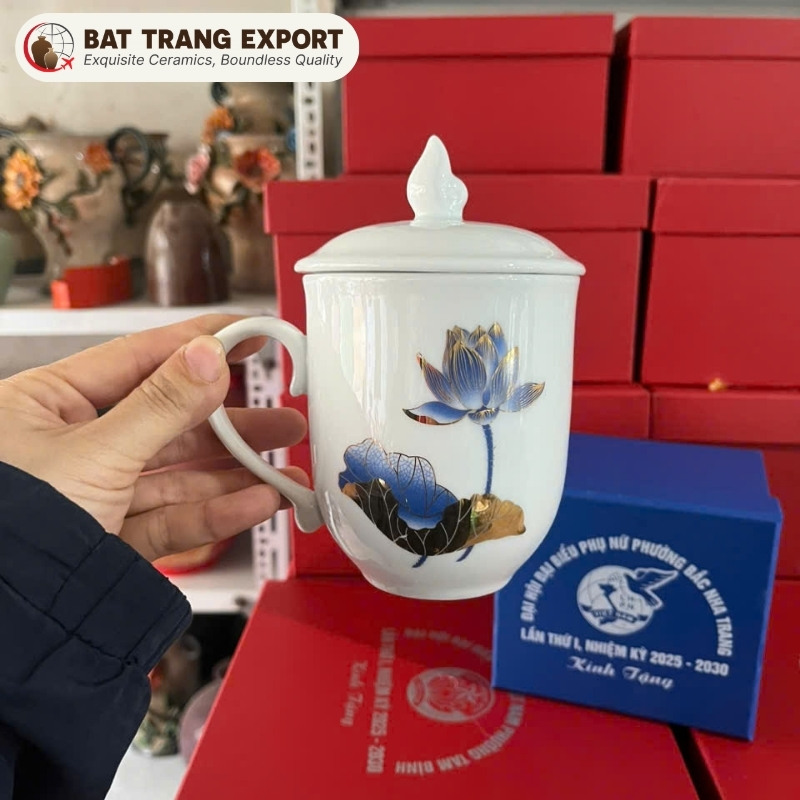
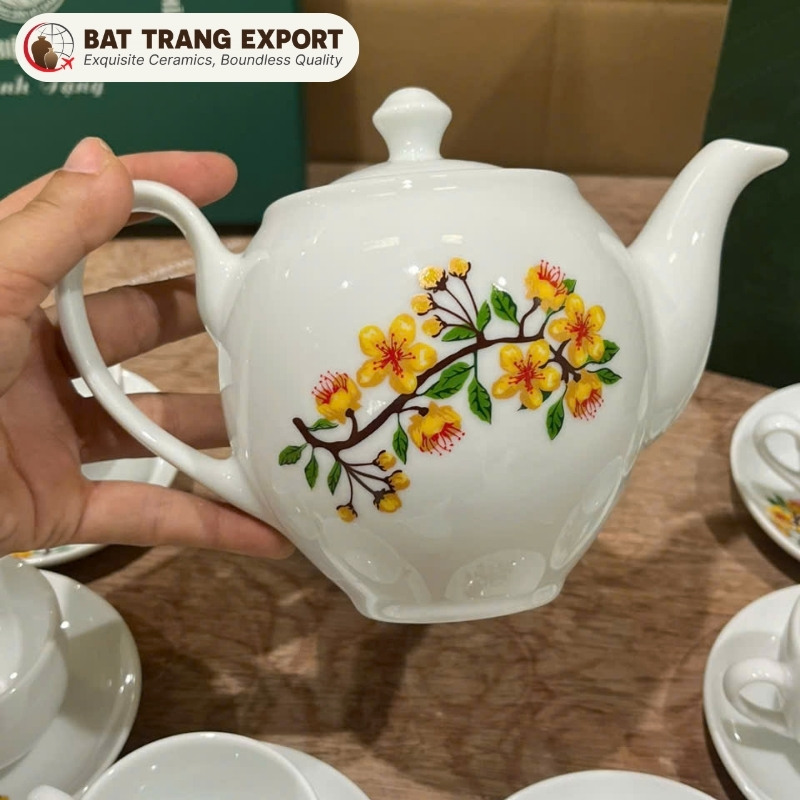
Ceramic products with decorative patterns are created by decal printing technique
Pros and Cons of Decal Printing
Implementing decal printing is highly advantageous for industrial-scale pottery production and corporate branding. However, clients must consider the initial setup requirements before committing to this scalable method.
Pros:
- Absolute visual consistency: The water-slide transfer ensures that every single unit is 100% identical, maintaining strict brand uniformity across the entire batch.
- Precise color and logo rendering: This technique accurately reproduces complex multi-colored vector graphics and specific Pantone matching requirements.
- Cost-effective for high volumes: Once the initial printing screens are produced, the unit cost drops significantly for massive promotional orders.
Cons:
- Lack of Unique Variations: Every item in a printed batch is visually identical, which removes the distinct, premium handcrafted aesthetic that boutique retail brands often require for their collections.
- Higher Minimum Order Quantity (MOQ): Manufacturers generally demand larger order volumes to financially justify the initial decal printing setup costs.
While decal printing is excellent for achieving consistent, full-wrap patterns on dinnerware, brands looking specifically to apply corporate branding should explore dedicated ceramic logo printing techniques, such as specialized fired decals, screen printing, or UV DTF.
Core Differences: Hand-Painted vs. Decal (Comparison Table)
Comparing these technical specifications side-by-side helps procurement managers make precise sourcing decisions. Furthermore, understanding these core differences guarantees that the final ceramic products align with your budget and aesthetic goals.
| Feature | Hand-Painted | Decal Printing |
| Visual Consistency | Natural variations | 100% identical |
| Design Complexity | Simple, brush-stroke patterns | Complex, multi-color logos, CMYK |
| Setup Costs | None | High (Screen/Film fees) |
| Scalability | Slower production | Highly scalable, fast |
| Best For | Boutique retail, rustic brands | Corporate gifts, F&B chains, modern retail |
Ultimately, your choice of decoration technique should align with your broader sourcing strategy. Brands developing highly exclusive, artisanal shapes often lean towards hand-painting, whereas those selecting an OEM vs. ODM ceramic manufacturing model for mass retail usually prefer the speed and consistency of decal application.
Technical Durability: Are They Microwave and Dishwasher Safe?
International B2B buyers frequently question the technical durability of custom decorations, particularly regarding daily commercial usage. Fortunately, both techniques yield highly durable, FDA-compliant products when manufacturers execute the firing processes correctly.
Hand-painted underglaze ceramics boast exceptional scratch resistance because the pigments undergo complete vitrification. Consequently, the protective top glaze shields the colors entirely, making these items completely microwave and dishwasher safe for heavy restaurant use.
Conversely, overglaze decal printing requires precise temperature control to ensure maximum longevity. When fired at the optimal temperature, the decal ink melts directly into the existing glaze, creating a robust bond that withstands repeated industrial dishwasher cycles.
Both hand-painted motifs and printed decals can be applied over or under the glaze. Understanding the interaction between your decoration method and the common types of ceramic glazes is crucial, as it directly affects the product’s food-safety, microwave compatibility, and overall visual finish.
Decision Framework: Which Technique Suits Your B2B Order?
Navigating the technical differences between these decoration methods is crucial for optimizing your supply chain. Therefore, buyers should utilize the following decision framework to select the most appropriate manufacturing strategy.
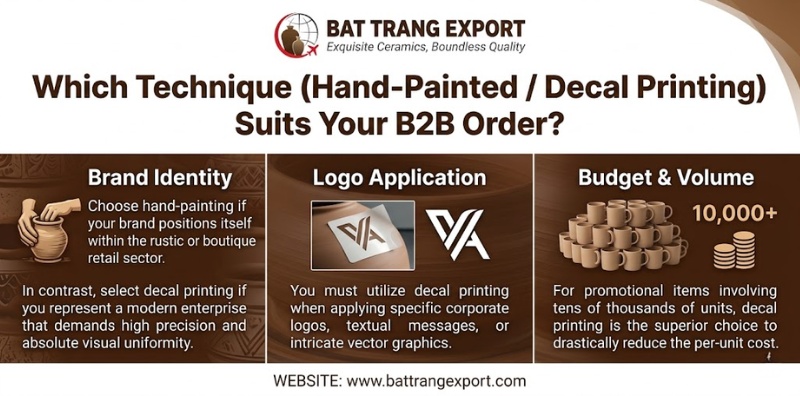
– Brand Identity: Choose hand-painting if your brand positions itself within the rustic or boutique retail sector. In contrast, select decal printing if you represent a modern enterprise that demands high precision and absolute visual uniformity.
– Logo Application: You must utilize decal printing when applying specific corporate logos, textual messages, or intricate vector graphics.
– Budget & Volume: For promotional items involving tens of thousands of units, decal printing is the superior choice to drastically reduce the per-unit cost.
Because hand-painting relies heavily on the time of skilled artisans rather than machinery, it significantly increases the unit cost. Knowing how to calculate export ceramic prices will help you accurately weigh the high labor costs of hand-painted wares against the scalable economy of decal printing.
Custom Decoration Capabilities at Bat Trang Export Factory
Bat Trang Ceramic Factory possesses extensive manufacturing infrastructure to accommodate a wide variety of custom B2B orders. We consistently deliver premium export-grade pottery by strictly adhering to international quality control standards.
Our facility employs highly skilled craftsmen who specialize in precise manual application techniques. These experienced painters accurately execute intricate underglaze patterns, ensuring exceptional quality for boutique retail collections.
In addition, Bat Trang Ceramic Factory collaborates with advanced lithography partners to provide cutting-edge decal printing solutions. This strategic partnership allows us to accurately reproduce complex CMYK graphics and exact Pantone colors for demanding corporate clients.
Furthermore, our technical team possesses the expertise to seamlessly combine both decoration methods on a single ceramic item. We can apply a hand-painted underglaze rim alongside a highly precise overglaze decal logo to meet unique branding requirements.
Frequently Asked Questions (FAQs)
Procurement managers often require specific technical clarifications before committing to a large-scale ceramic order. Below are precise answers to common inquiries regarding our custom decoration processes.
Q1: Can I combine hand-painting and decal printing on a single ceramic product?
Yes, many brands combine a hand-painted rim or pattern with a decal-printed central logo to achieve both artisanal aesthetics and precise branding.
Q2: Is there a setup fee for custom ceramic decals?
No, there is no additional setup fee for custom ceramic decals. Bat Trang Ceramic Factory utilizes advanced digital decal printing technology, which completely eliminates the need for traditional color screens. Consequently, buyers can print complex, multi-color logos without incurring any extra setup costs before mass production.
Q3: Will hand-painted colors fade after repeated washing?
No, because hand-painting is typically applied as an underglaze. The protective top glaze is fired at high temperatures, sealing the colors permanently against wear and fading.
In conclusion, selecting between hand-painted and decal printing techniques depends entirely on your target audience, budget constraints, and design complexity. Bat Trang Ceramic Factory stands ready to support your sourcing needs with superior manufacturing capabilities and rigorous quality assurance. Contact our technical team today with your Tech Pack to receive expert guidance and a competitive wholesale quotation!